
What are Reporting Groups?
Alkimii's Reporting Groups feature takes your checklist analytics to the next level. A reporting group brings together checklists that share the same category and frequency, so your dashboard can surface meaningful trends — rather than treating every checklist as a one-off.
If you're new to checklists in Alkimii, it's worth first getting familiar with how to create a checklist and how to create a category for checklists, as reporting groups are built on top of these. Once your groups are set up, this article will walk you through organising your checklists so you can unlock deeper insights through your dashboard analytics.
🔐 Restricted Access: Reporting group dashboards are configured at organisation level. To create or manage reporting groups, you'll need the relevant permission enabled on your user role — if you don't see this option, contact your administrator or our customer access team.
How to Set them Up?
- Navigate to App Settings, either from the menu or using the search bar.
- Scroll to the Property heading, click the Checklists dropdown, and select Reporting Groups.
- Here you'll see a full list of pre-existing groups, which would have been configured during your initial installation.
- To add a new reporting group, click Add Group in the top right corner.
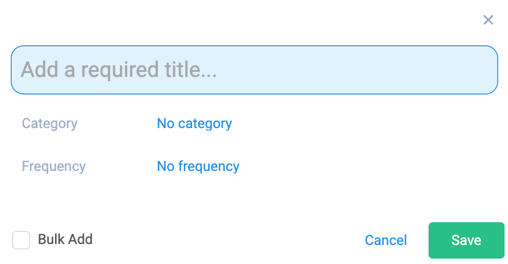
- A pop-up will ask you to name the reporting group. Select a checklist category — see how to create a category for checklists if you need to set one up first — and choose a frequency from non-recurring, hourly, daily, weekly, monthly, quarterly, biannually, or yearly.
- If you'd like to add several groups at once, tick Bulk Add. This opens a fresh, blank version of the same form underneath, ready for your next group.
- Click Save to add the group (or groups).
Once your reporting groups are set up, you'll assign checklists to them individually. When creating or editing a checklist, you'll see a Reporting Group dropdown. This defaults to "No reporting group" and is optional, so you can leave a checklist unassigned or add it to a group regardless of its category.
How to Edit or Delete a Reporting Group?
Your new group(s) will now appear in the list view. To edit or delete one, use the pencil or bin icon on the right of the group name, under the Actions column
What's next?
Once your reporting groups are set up, head over to how to navigate the checklists group dashboard to see your new analytics in action. If you're still building out your checklist structure, you may also want to look at how to apply a category to your new checklist or how to change the category currently associated with a checklist.